


Calling all StageSiders, welcome back to another instalment of StageSide Stories. We are bringing you something different in this instalment. This time we are speaking with Zack Buchman, creative director of Furry Puppet Studio. Because everyone loves puppets.
Q. To begin, could you introduce yourself, tell us about your role at Furry Puppet Studio, and give our readers an insight into the work you do?
I’m Zack Buchman, founder and Creative Director of Furry Puppet Studio in SoHo, New York. We design and build custom puppets, creatures, mascots, rod puppets, and marionettes for TV, advertising, music videos, and everything in between. My role essentially covers the whole arc of a project, from the first sketch through the build, and I like to stay involved through casting and the actual shoot, since so much of a puppet’s life only starts when the design and fabrication are completed.

Q. Can you remember the first puppet, creature or character that made you realise this was something you wanted to create yourself?
I can’t point to one single puppet, honestly. I’ve always been obsessed with faces. Sesame Street was probably the first place I saw that obsession looking back at me. I remember being genuinely terrified by characters like The Amazing Mumford that had only a resemblance of eyes but no eyes. It would just not leave my brain. I remember trying to build a marionette with feather parts early on but the details are fuzzy.
Q. What is it about puppets that allows audiences to form such strong emotional connections with them, despite knowing they’re not real?
I think it’s the physical part. A puppet is actually in the room with you, you can reach out and touch it, and once the suspense of disbelief kicks in, it’s just alive to you. I’ve watched adults have a bigger reaction to a puppet than kids do, and I’ve seen a room lose it over Puppet Up!, the live improv puppet show the Jim Henson Company put together. It just works.
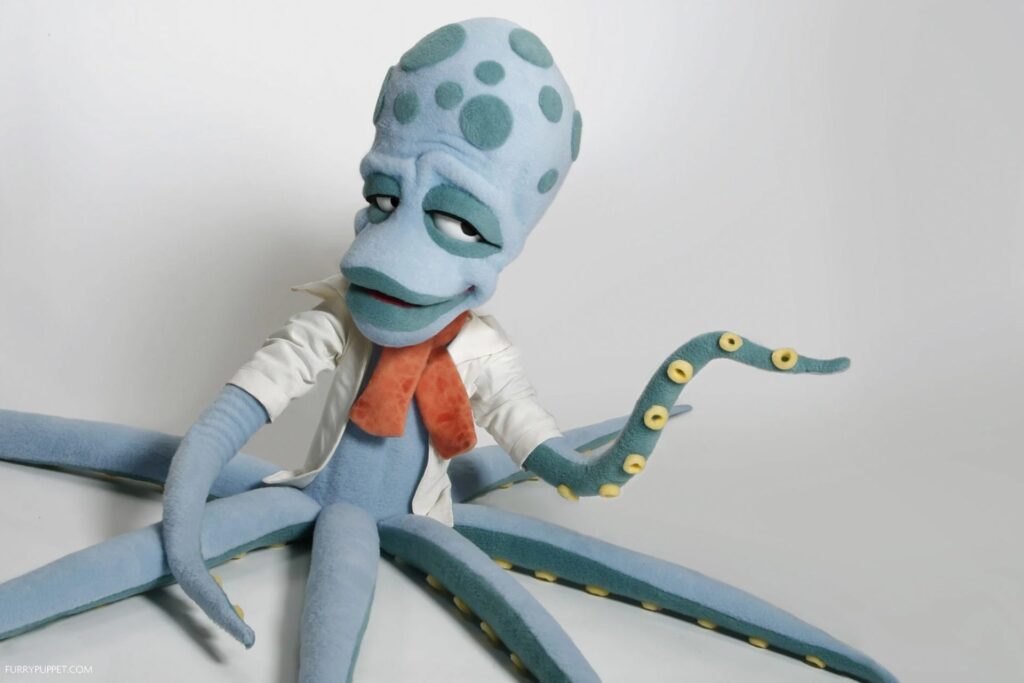
Q. When you’re designing a new puppet, where does the creative process begin, with the character, the story, the visual design, or something else entirely?
It usually starts with a loose sketch. An example of that was the Bitcoin character we designed for Jack Dorsey at Square: we kept coming back to the original scribble I made in the first meeting, and that eventually became the final mascot. Sometimes it just works and you don’t know why. Other times a material leads instead, a fur or a fabric you come across that suggests the whole character before you even have the opportunity to take out the pencil. From there it becomes a hand carved foam mock-up, and we move into patterning, then final materials and details.
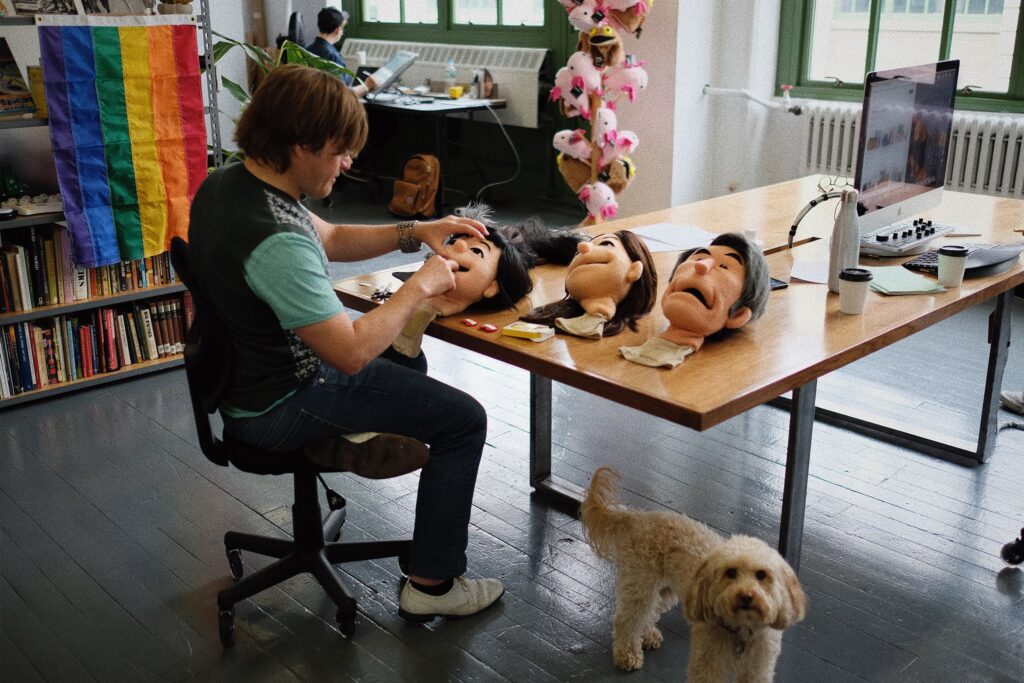
Q. A successful puppet often appears effortless on stage or screen. What are some of the hidden details and challenges that audiences might never notice?
Most of the real problem solving is invisible to the audience, that’s correct. And to be honest, sometimes a lot of it is invisible to us as well. The process is so organic and connected that so much of it happens intuitively rather than as a checklist, which means knowing when to stop adding detail is still harder than it sounds. Over-design it and a puppet goes uncanny rather than alive. The eyes usually go in last, and moving them just a few millimeters can make or break the character.
Q. How do you balance artistic creativity with the practical realities of building something that performers can operate repeatedly and reliably?
I like having a performer in mind while I’m still designing, and I try to stay involved in casting and early rehearsal. I’ve come to think about it as a relationship and not a tool and an operator. As a rule of thumb, I try to keep mechanics as simple as they need to be and relay more on the organic movement of the puppet, and a well designed puppet lets the performer disappear into the character instead of fighting the rig every night.
Q. Has there been a particular project or character that taught you something new about your craft?
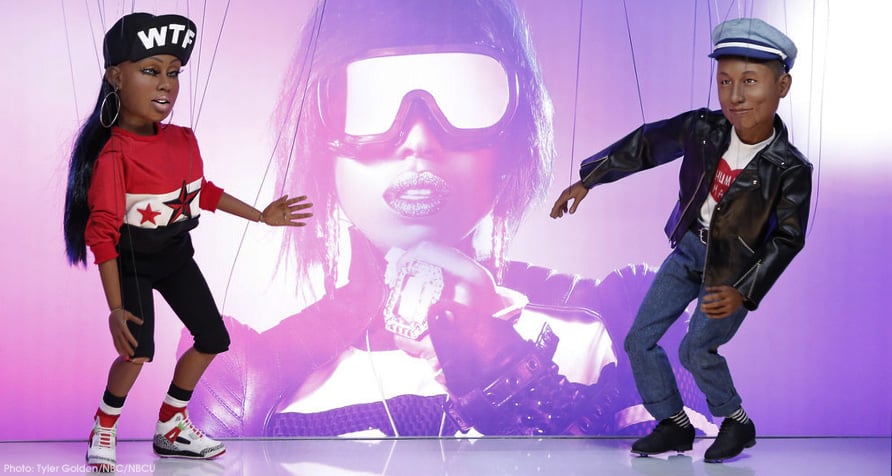
The Missy Elliott and Pharrell Williams video for “WTF” is an example I like to bring here. We built the marionettes and costumes entirely by hand, and the costumes were performed live by street performers, so we spent a lot of time studying their movement and reverse engineering it into the rigging. We wanted to build on how they do things and on the authentic vibe they bring into it. It was special.
Q. The worlds of theatre and film are evolving rapidly. How has puppet-making changed during your career, and what excites you about its future?
It’s changed in small ways more than big ones. 3D printing now handles a lot of the eyes and small mechanisms, which opens up more possibilities and removes restrictions. People also share technique much more openly online than they used to, so a technique someone shares today might show up in a completely different puppet a year from now. What excites me is that puppetry keeps evolving and new human connections keep being formed around it.
Q. What do you think people misunderstand most about the work that goes into creating puppets and creature performances?
I think people assume more detail automatically makes a better puppet, and it’s usually the opposite. Strong design keeps only what’s essential, the less you spell out, the more the audience fills in on their own. I look at the silhouette and the overall shapes before I ever get into the specifics. Less is more goes a long way with character design.

Q. Finally, if you could give one piece of advice to an aspiring puppet designer and maker, what would it be?
Keep a sketchbook and pencil with you at all times, and scribble whenever you can. If you’re a social media user, I recommend deleting all those apps from your phone and spending that time getting whatever is in your head onto paper instead. Start collecting materials too. When the right moment comes to begin putting things together, you’ll know it.
Thank you to Zack for answering our questions and sharing some really valuable insights into the world of puppetry, design and commercial crafts.
Have your say
Are you thinking of starting a career as an actor or comedian? Are you studying comedy or stand up performance at college, University or Drama School? How are you finding the process, and do you have any tips?
Let me know in the comments!
If you are interested in being featured in the next installment of StageSide Stories, then please do reach out to us and we would be happy to discuss this with you.
As always, please be respectful of each other’s opinions and be kind to each other.
Bullying will not be tolerated and harmful language may be removed. Head over to the Terms and conditions page to learn more about our policies, here at StageSideUK.
Follow us on Twitter and give our page a like on Facebook.