


Calling all StageSiders, welcome back to another installment of StageSide Stories, here at StageSideUK. This time around we speak with Esther Huss and Alex Oates, Co-artistic Directors of The Tute Cambois and creators of The Rude Health Festival. We talk all things creating a festival, what makes Rude Health different to other festivals, and we get some insights into how to create our own festival. So settle in and lets chat to Esther and Alex, stageside!
To start, could you introduce yourself and tell us a little about the Rude Health Festival and what it stands for?
Esther: I’m Esther Huss, Co-Artistic Director of The Tute in Cambois and creator of Rude Health Festival. We live and work on a semi-peninsula with the sea on one side and a river on the other, so place is everything to us. Rude Health is our way of bringing radical, generous culture into a community space — a festival about health in the widest sense: the health of our bodies, our stories, and our coastline.
Alex: And I’m Alex Oates, playwright and Co-CEO/Co-Artistic Director of The Tute. Rude Health runs across three months — performances, school programmes, and workshops — giving people a chance to think about art, ourselves, and our planet together in the same room. That act of gathering is its own quiet revolution.
For those who might not know, what makes Rude Health different from other arts festivals?
Esther: We programme contemporary work but keep it deeply local. Tickets are free — we still “sell” them because we track attendance — and we present it all from the Cambois Miners’ Welfare Hall, a nearly 100-year-old building full of brass bands and leek-show memories. We’re breathing fresh air into those walls while honouring what came before.
Alex: We don’t do safe, crowd-pleasing filler. We invite artists who’ll meet a first-time audience with care and curiosity. The joy for us is seeing people who’ve never been to a theatre encounter work with the childlike glee of pioneers.
How did the festival first come about, and what was the original spark behind it?
Esther: Moving to Northumberland, I wanted to connect rigorous, contemporary practice with accessibility. “Health” became a clear theme — everyone has a stake in it — and it let us bring dance, theatre, and visual art into one conversation.
Alex: After Covid, opportunity for freelancers felt scarce. We found our way into the derelict miners’ institute, fell in love with it, and decided to build a utopian little theatre haven here. The Tute became a charity; Rude Health became the flagship.
Congratulations on the nomination for the 2025 North East Culture Awards! How does it feel to see the festival recognised in this way?
Esther: Heartening. It feels like a nod to our artists, volunteers, and the community who’ve trusted us to try bold things. We’ve been really touched by the response of other organisations and individuals to it, that feels like the best thing.
Alex: Awards aren’t the point, but recognition helps us keep the lights on and the work ambitious. Mostly, it’s fuel.
As Joint Artistic Director, what does your role involve day to day, and how do you balance artistic vision with practical organisation?
Esther: Everything from curating line-ups to taking out the bins. I draw on my dance background — collaboration, flexibility, care — to hold it all together: artists’ schedules, workshops, volunteers, marketing, “selling” free tickets. I’ve been practicing Nichiren Buddhism for just under 20 years and this hugely informs my reflections, determinations and actions when preparing for events. We have a great team of volunteers and freelancers led by us and Danielle our assistant producer who help massively.
Alex: Add budgets, funding bids, contracts, risk assessments, safeguarding and H&S, insurance, trustee meetings, and the small matter of writing plays. The balance is simple: keep the artistic reason clear enough that the admin serves it.
What are some of the biggest challenges of running a festival, and what keeps you passionate about doing it year after year?
Esther: Funding. This year we had to trim the programme to make it work. But the payoff — a room full of different people sharing an experience then talking about it — is everything.
Alex: Convincing people that challenging work can be welcoming. What keeps me going is the conversation afterwards — that sense a community has shifted a millimetre.
The festival brings together artists from a range of disciplines. How do you go about curating such a diverse programme?
Esther: Relationships and values. I’ve worked across the dance sector for over 20 years; we invite artists who bring rigour and generosity. We co-design with them, so each piece is in dialogue with our place and audiences.
Alex: We program work and ideas that we’d like to see. Often I think about what excited me when I was a teenager getting excited in the potential of the arts and think what is it that I can bring to the equivalent teenager in our area looking for a spark of inspiration.
Community and collaboration seem to sit at the heart of Rude Health. How do you ensure that local voices are represented and celebrated?
Esther: Every project has school integration. Access to arts has been tough for schools — Covid, budget cuts, austerity — so we take the work to them. For Stronger Shores, artist Laurie Powell led kelp art workshops at Cambois Primary; poet Linda France worked on writing with the children. Their pieces sit in the exhibition alongside the professionals’.
Alex: Our venue literally overlooks the coast. People here have lived through power-station closures, mining’s end, storms. The work listens to that history and invites people in as co-authors, not spectators.
Has there been a particular performance or project that, for you, really captures the essence of what Rude Health is all about?
Alex: A reading of Krapp’s Last Tape with Trevor Fox — taking Beckett into a care home and feeling the room change. And HIPS AND SKINS, by Esther and Jacky Lansley, about women’s experiences of the health system — hilarious, tender, radical.
Esther: Stronger Shores does, too. It translates kelp forests, seagrass, and oyster reefs into movement and image without losing the science — and with humour. It’s serious, but accessible and fun.
Looking ahead, what are your hopes for the festival’s future? Are there any ambitions or ideas you’d love to see realised in the next few years?
Esther: Tour more of the work seeded here, deepen school partnerships, and keep commissioning artist-community collaborations that travel. I’d like to see more people who’ve never experienced the arts come through the door and engage with it. I’d like to see young people make ambitious choices for their lives and we hope to play a small part in that. The determination is for Cambois to become the most resilient community in the country built on a foundation of empathy and thought.
Alex: Sustain free-ticket access and enough funding to make it happen annually. That feels ambitious in this current climate. Beyond that I’d love to form an ensemble of theatre makers and produce our own large scale work.
And finally, what advice would you give to someone wanting to create their own festival or platform for emerging artists?
Esther: Lead with care. Build real relationships. Make the work rigorous and welcoming. Start with what your community already holds and let artists tune to that frequency.
Alex: Understand the job: interrogate truth, feed your place, accept the long road. Get your policies and risk assessments right. It’s a privilege to have an income from the arts so if you can make that happen then make sure you work hard and don’t take it for granted.
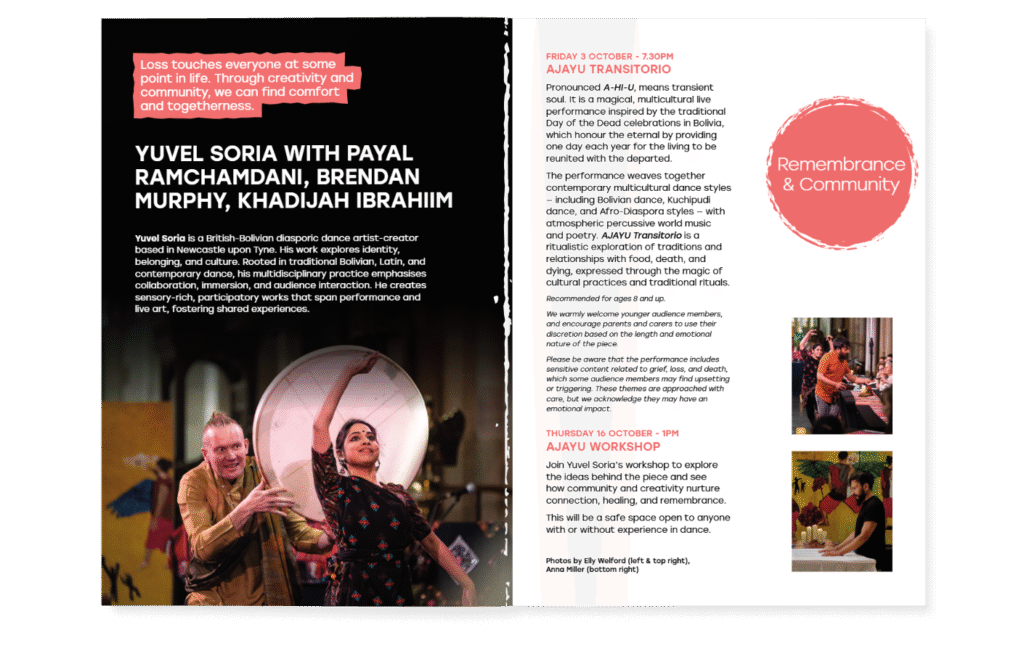
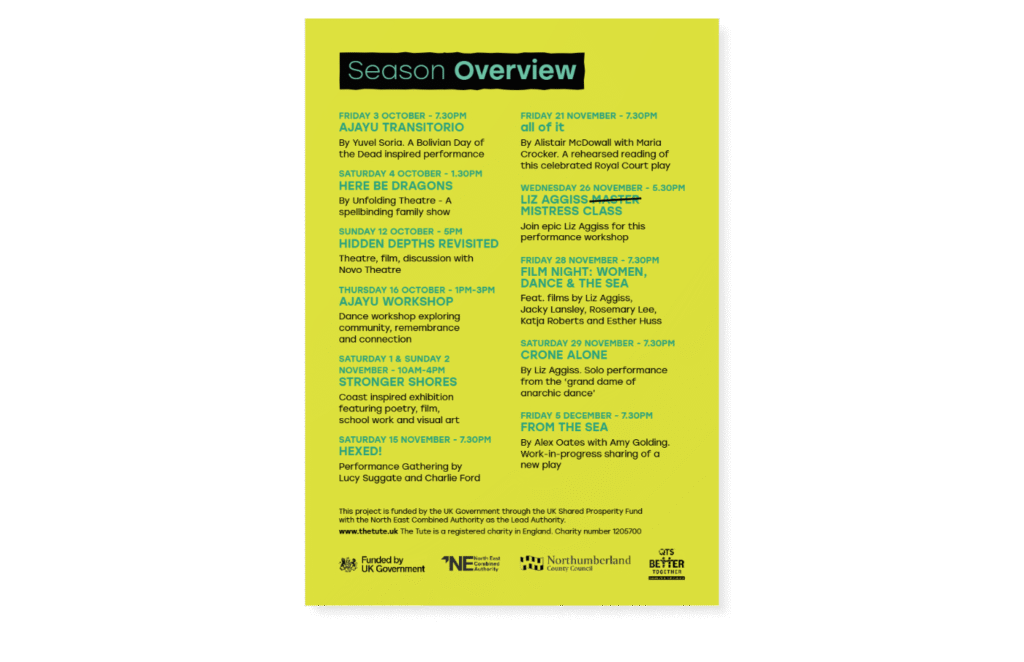
A huge thank you to Alex and Esther for their time, and for sharing such interesting responses. If you are interested in the Rude Health Festival 2025, you can find out more information here.


Have your say!
Are you thinking of starting a career as a festival planner, or show creator? How are you finding the process, and do you have any key techniques, tips or skills to hone? Let me know in the comments and lets get a discussion going!
If you are interested in being featured in the next installment of StageSide Stories, then please do reach out to us and we would be happy to discuss this with you.
As always, please be respectful of each other’s opinions and be kind to each other. Bullying will not be tolerated and harmful language may be removed.
Head over to the Terms and conditions page to learn more about our policies, here at StageSideUK.
Follow us on Twitter and give our page a like on Facebook.
Featured images have been referenced and are used in line with fair usage, in the copyright act.