


Calling all StageSiders, welcome back to another review. Last night I headed to Eel Marsh House via Darlington Hippodrome to spend an evening with The Woman in Black… and yes, I absolutely left checking every shadowy corner on the way out.
Disclaimer: I was gifted a pair of free tickets in exchange for an honest review of the show.
This production is, without doubt, a five-star masterclass in storytelling. It proves (again) that you don’t need to throw every theatrical trick in the book at an audience to terrify them, you just need to tell the story properly and trust it. There’s something refreshingly confident about how stripped-back it is. No clutter, no confusion, no “wait… who’s that again?” moments. Just a tale that knows exactly what it’s doing, and does it with eerie precision.

As a self-confessed scaredy-cat, I went in fully expecting to be halfway down the aisle within the first five minutes. But fellow nervous souls, relax. It is not as relentless as you might fear. The scares lean far more into psychological unease than constant things leaping out at you. Yes, there are a few jump scares, but they are so perfectly timed and so well earned that I couldn’t even be mad about them.
The tension is carefully wound tight, with just enough relief to let you breathe before it tightens the screw again. And that is the genius of it. It is not scare-scare-scare for the sake of it. The tension is earned. It starts small, with a quiet detail, a shift in tone, an innocent line that suddenly feels less innocent. Then it builds in layers until you’re leaning forward without even realising. Just when you think the show might let you off the hook, it gives you a moment of warmth or humour. Not enough to break the atmosphere, but enough to make you drop your shoulders and convince yourself you are safe. That’s the trap. Because the second you exhale, it grabs you again. It is a perfectly paced game of “you’re fine… you’re fine… you’re definitely not fine,” and honestly, I respect the audacity of it (even if my nerves don’t).
And let’s talk about the two people carrying this whole thing like it’s nothing. Two actors, one stage, and a whole world of characters. Honestly, it stayed rich and believable throughout, which is no small feat when one person is playing so many people. In fact, the simplicity makes the performances stand out even more, because there’s nowhere to hide. If it doesn’t work, it really doesn’t work. But this? This works brilliantly.
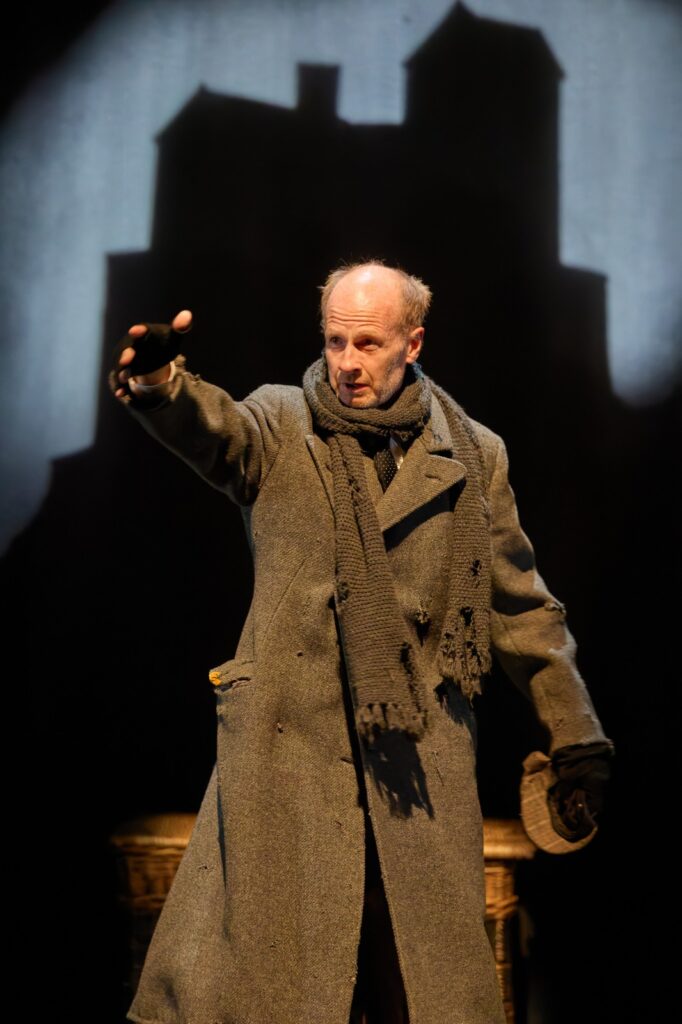
Hats off to John Mackay, who does some seriously impressive work. He shifts between a range of accents and characters so seamlessly that it is never difficult to tell exactly who he has become. The changes are crisp and specific, right down to posture, voice, rhythm, even the way he holds a pause, so each character feels distinct without it ever becoming showy. It’s the kind of performance that looks effortless, which usually means it absolutely is not.
Daniel Burke is equally captivating. His performance is invigorating, convincing, and completely locked in. There is a real drive that keeps the story moving, but it never feels rushed. He pulls you in, and he makes the fear feel human rather than theatrical, which makes the chills hit that much harder.
Together, they are a perfect duo. Their timing is razor-sharp, their energy matches scene for scene, and they balance each other in a way that makes the whole production feel bigger than it actually is. When a show relies on two people to hold the room, you need trust, chemistry, and control, and they have all three (no notes, Your Honour).
Of course, the Woman in Black herself is only glimpsed a handful of times, and even then it is usually just a brief blink-and-you’ll-miss-it moment. But that is exactly why it works. Even when she is not physically on stage, her presence hangs over everything. You feel her in the silence, in the shadows, and in the way the atmosphere seems to tighten whenever the story edges closer to her. She is basically the queen of “less is more,” and I hated how well it worked.
The stage design and lighting deserve a proper round of applause too. Simple, yes, but clever and simple. It’s one of those setups where the minimalism becomes the magic trick, because your imagination ends up doing half the work… and in a ghost story, that’s dangerous, because your imagination is always crueler than anything you could physically put on stage.
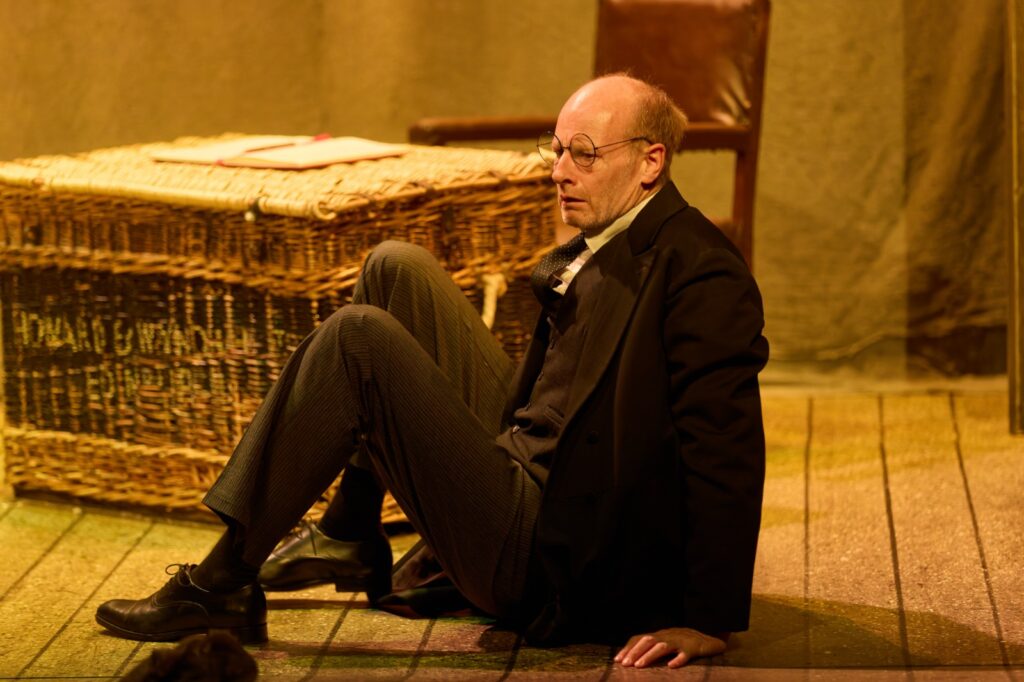
A particular highlight for me was how effectively they used a sheet and lighting to transform the space. With the right angle and glow, that sheet suddenly doesn’t read as fabric, it reads as separation, distance, a whole new room existing behind it. It’s such a small idea, but it lands brilliantly, and it adds to that feeling that the world is shifting under your feet.
Accessibility
This production includes occasional flashing light and sudden loud noise. If you’re sensitive to either (or you prefer your horror served without a side of jump-scare shock), it’s worth keeping in mind before you go, but honest, it’s not that bad.
Value for money
Tickets at Darlington Hippodrome are listed from £17.50 up to £45 depending on seat band, and the running time is around 120 minutes.
For a show this tight, this effective, and this well performed, it felt worth every penny. You’re paying for atmosphere, timing, and craft, and this production delivers all three.
If you’re local and fancy a trip to the dreaded Eel Marsh House, then The Woman in Black is at Darlington Hippodrome until Saturday 10 January 2026 and continues to tour until April 2026.

Have your say!
Have you seen The Woman in Black? Let me know what you thought, and whether you also walked home pretending you were totally fine with the dark.
As always, please be respectful of each other’s opinions and be kind to each other. Bullying will not be tolerated and harmful language will be removed.
Head over to the Terms and conditions page to learn more about our policies, here at StageSideUK.
Follow us on Twitter and give our page a like on Facebook.
Featured images have been referenced and are used in line with fair usage, in the copyright act.
 Jonathan Harper